The playbook below applies to any tools you run — POS, menu software, marketing stack, whatever. Where a specific tool makes a tactic easier to execute, we name it; Tappflow's restaurant platform happens to cover several of the steps in one place.
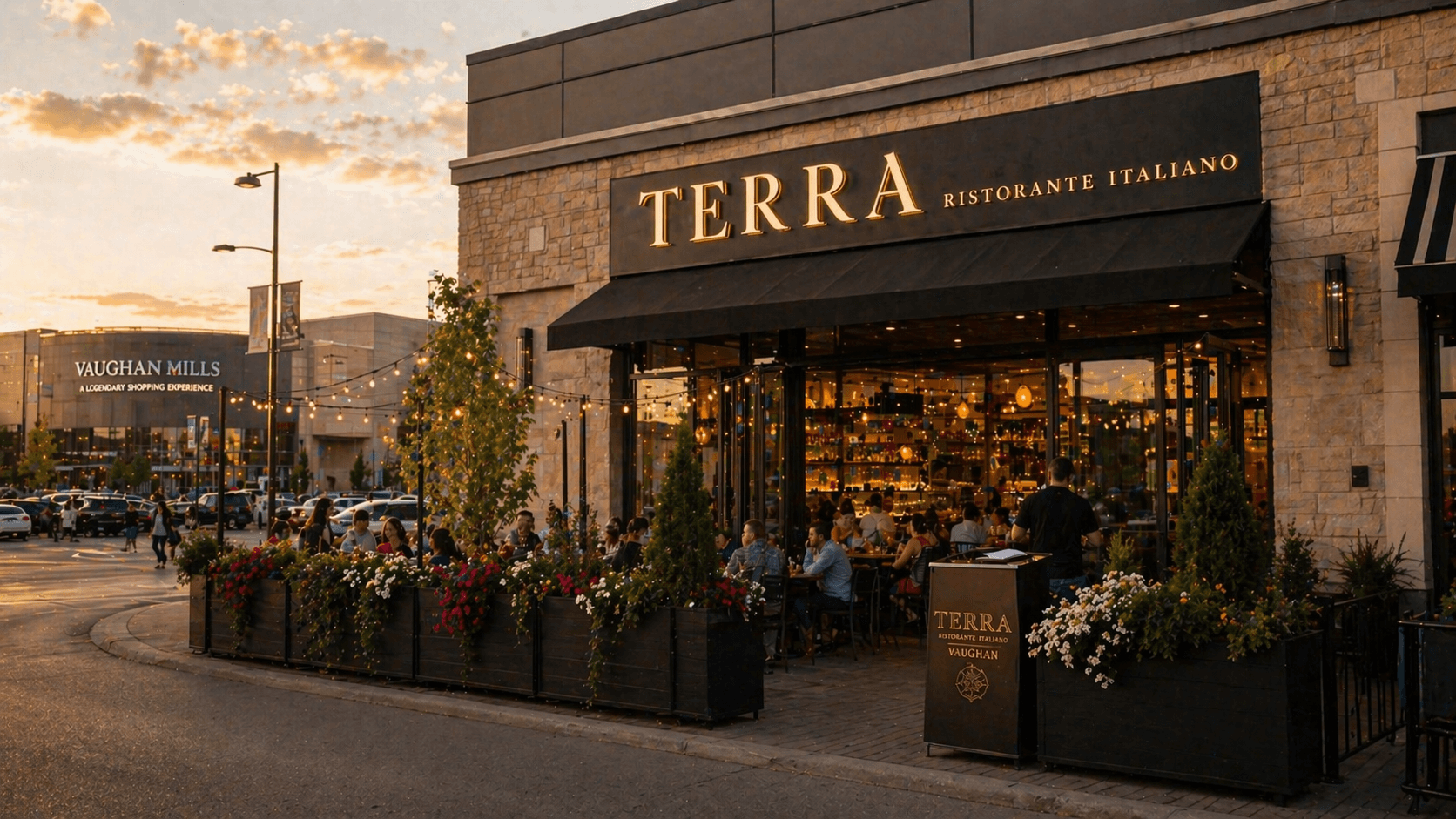
The Vaughan restaurant landscape right now
Vaughan is really several sub-cities. Woodbridge is the cultural and culinary centre — an Italian-Canadian community so established that pizza rivalries on Weston Road and Islington Avenue go back three generations. Kleinburg is a small heritage village with the McMichael Gallery, antique shops, and a handful of destination restaurants that attract GTA-wide Sunday-drive traffic. Maple and Concord are suburban residential sprawl, increasingly multicultural, with family-casual dining in plazas. Vaughan Mills is the mall-driven trade area where Canada's Wonderland drives summer family traffic and winter holiday shopping. Vaughan Metropolitan Centre is the newer subway-driven condo core that is building out a more urban dining profile. Italian bakeries, trattorias, and steakhouses still define the city's food identity, but Mediterranean, Portuguese, and Middle Eastern kitchens are quietly expanding with the changing demographic mix. Banquet halls — many of which double as restaurants — are disproportionately important, with the wedding economy intertwining with regular service in a way unlike other GTA cities.
Vaughan's Italian restaurant competition is intensely generational. Certain trattorias on Weston Road have 50-plus years of continuous operation and pull regulars whose grandparents ate there. New entrants survive only by carving a clear identity — modern Italian, wood-fired Neapolitan, Roman-style, Sicilian. Vaughan Mills and Jane-Rutherford plazas draw national chains (Cactus Club, Earls, Joey's) that mostly compete for corporate lunch and date-night casual traffic. Kleinburg's small set of destination restaurants competes on ambiance and weekend-drive experience more than on food innovation. Portuguese and Middle Eastern kitchens are growing fastest in the Maple and Concord corridors.
Local challenges
- Generational Italian trattorias compete on loyalty your new concept cannot buy in five years
- Car-first grid means nearly zero walk-in traffic — every cover is decided before the driver turns the ignition
- Banquet-hall scheduling shifts entire community-block dining patterns with two weeks' notice
- Demographic shift is moving younger families away from Woodbridge toward Maple and Kleinburg suburbs
- Summer Sunday lunch is so entrenched that disrupting service patterns is nearly impossible without losing regulars
Local opportunities
- Multi-generational family tables of 10+ command higher average tickets and pre-pay via NFC-driven reservations
- Bakery pre-order windows (Easter, Christmas, wedding cakes) support significant premium pricing
- Kleinburg day-trip destination dining pulls GTA-wide traffic every weekend of the year
- Vaughan Metropolitan Centre condo growth is building a younger, more urban dining base with no entrenched competition
- Corporate lunch and client-dinner catering for Highway 7 tech and logistics companies is underserved
How the seasons and cultural calendar shape sales
Easter and Christmas are peak seasons for Italian bakeries and trattorias in Woodbridge — panettone, colomba, and celebration cakes drive double-shift kitchens. First Communion season (April and May) is a quietly massive event, with weekend banquets and family lunches filling every reservation book. Summer Sunday lunches are the weekly rhythm in Woodbridge and Kleinburg — multi-generational tables of 10-plus that book standing reservations. Canada's Wonderland season (May through Labour Day) drives family traffic to Vaughan Mills and surrounding family restaurants. Winter (January to early March) is the only real slow stretch, with the New Year family gatherings giving way to a quiet pre-Lent lull. Wedding season (May through October) overlays the whole year — banquet halls run 200-plus weddings annually in the Woodbridge cluster alone.
8 ways to grow restaurant sales in Vaughan
These are the tactics that actually move covers, ordered from highest-impact to quietest-but-compounding. A few of the steps below are tuned specifically to Vaughan — the others are the standard independent-restaurant playbook that works city-wide.
- 1
Put a real digital menu on every table
A PDF behind a QR code is not a digital menu — guests bounce in three seconds. A proper digital menu loads in under two seconds on mobile, shows photos for hero items, and lets you mark a dish sold-out in one tap. Whatever platform you choose, test the menu on your own phone on cellular data in the dimmest corner of the venue; if it is slow there, it is slow everywhere.
- 2
Replace static QR with NFC tags on every table
QR codes work, but their friction — open camera, aim, tap notification — caps adoption well below what a tap achieves. NFC is one action with no app; every iPhone from 2016 and virtually every Android from the last decade reads it natively. Expect meaningful engagement lift on the same menu content, especially in full-service venues where guests already have a printed menu competing for attention.
- 3
Capture phone numbers from every table
The single most valuable asset a restaurant can build is a permission-based SMS list. Put NFC tags on the bill folder with a 'get our next special' opt-in. A 2,000-person list built over six months is worth more than any paid ad channel you can run — especially for seasonal reactivation, event weekends, and quiet Tuesdays.
- 4
Add tap-to-call-waiter and tap-to-request-bill
Guests dislike flagging down a server for basic requests — water, bill, extra napkins. An NFC tag on each table that routes to the assigned waiter's phone via push notification removes the awkward wave-and-wait. Table-turn speed tends to climb, and service perception improves — a quiet win that shows up in tips before it shows up in reviews.
- 5
Update your menu instantly when items sell out or prices change
86-ing a dish mid-service should take 3 seconds from your phone, not a staff-wide ticket and a pen-struck printed menu. A dashboard-driven digital menu lets you toggle availability, adjust prices, and roll in specials without reprinting anything — and without the guest awkwardly ordering something you ran out of at 7:30.
- 6
Run geo-targeted SMS blasts around events and weather
A Thursday-night 'patio is open and the sun is out' SMS to 800 local opt-ins outperforms a full week of Instagram ads for most independents. Same for game-night blasts within 2 km of Scotiabank Arena, or post-concert reactivation after Budweiser Stage shows. Your SMS list plus an event-calendar habit is the highest-ROI marketing channel most restaurants never actually build.
- 7
Run a standing-reservation NFC flow for Sunday family lunch
Woodbridge's Sunday lunch culture rewards restaurants that make 'our regular table at 1 p.m., every second Sunday' frictionless. An NFC tag on the table at Sunday service that lets a family re-book the same table next month in three taps locks in recurring revenue better than any marketing channel.
- 8
Build NFC-driven bakery pre-order pages for Easter, Christmas, and wedding cakes
Vaughan bakeries see two-week pre-order windows where the kitchen runs past capacity. A dedicated NFC tag at the counter that opens a pre-order page (cake size, flavour, pickup date) routinely converts a $40 walk-in into a $180 pre-order, and lets the baker plan production instead of fighting chaos.
Playing the Vaughan calendar
Every Vaughan restaurant year has a handful of days that deliver outsized revenue. Here is how to actually work them rather than let them wash over you.
- 1
Taste of Woodbridge — First weekend of June
Woodbridge restaurants run pop-up booths and see a week of elevated walk-ins. NFC lead-capture at the booth converts 8 to 12 percent of tappers into SMS subscribers.
- 2
Binder Twine Festival — Last Saturday of September, Kleinburg
Kleinburg village fills — every restaurant is on a reservations-only footing. Pre-book via NFC two weeks in advance.
- 3
Wedding season & First Communions — May through October (weddings) / April through May (Communions)
Restaurants linked to banquet halls should offer NFC-driven rehearsal-dinner and bridal-shower pre-booking — deposit-protected.
- 4
Canada's Wonderland season — May through Labour Day
Family restaurants within 5 km see weekend dinner bumps — capture phone numbers for winter-season reactivation when Wonderland closes.
- 5
Christmas & Easter — December and late March / April
Panettone, colomba, and celebration cake pre-orders dominate for two weeks prior. NFC-order pages for cake pickup reduce phone chaos.
Neighbourhood-by-neighbourhood
Tactics that work downtown often misfire in a plaza, and vice versa. The micro- markets below drive different dayparts, ticket sizes, and marketing channels.
Woodbridge (Weston & Islington)
Italian-Canadian heartland — generational trattorias, panetterias, steakhouses, weekly Sunday lunches.
Kleinburg
Heritage village — Sunday-drive destination dining, McMichael Gallery adjacency, tasting menus.
Vaughan Metropolitan Centre (VMC)
Newer subway-driven condo core — modern casual dining, chain anchors, young-professional clientele.
Maple
Family-casual plaza dining, multicultural mix, student and young-family traffic.
Vaughan Mills corridor
Mall-driven chain dominance; summer Wonderland family bump.
Running this playbook in Vaughan?
If you'd rather not stitch NFC hardware, menu software, and analytics from three different vendors, see how Tappflow's restaurant platform bundles them.
Frequently asked questions about restaurants in Vaughan
For the right concept, yes — Kleinburg pulls GTA-wide weekend traffic to a handful of destination restaurants because there is simply nothing like it inside the GTA. The business risk is midweek: Tuesday and Wednesday can be very quiet. Build an SMS list aggressively from weekend walk-ins and send targeted midweek offers to drop cover gaps.
You do not compete head-to-head on 'classic Italian' — you win by being the venue for a specific occasion or style the old guard does not own. Modern Neapolitan, Roman pinsa, Sicilian seafood, natural wine bars, and premium Sunday brunches all carve out room that the generational trattorias are not chasing. Capture phone numbers aggressively so your first 500 regulars become a marketing channel that does not depend on lifelong loyalty.
A typical 40-seat restaurant takes about an afternoon. You receive pre-programmed tags, stick one to each table (or under the lip), confirm each is bound to the correct table in your dashboard, and you are live. There is no app for guests to install — they tap their phone and the menu opens instantly.
On every iPhone from the iPhone 7 (2016) forward, and on virtually every Android phone from the last decade. iPhone XS and newer read tags in the background with no app open — just tap and the menu opens. For the rare edge case, most tag cards also carry a printed QR as a fallback so nobody is excluded.
Software sits in the $0–$50/month range for most single-location venues in 2026; Tappflow specifically has a free tier that covers the core digital menu, with paid tiers when you need more menus, languages, or SMS volume. Hardware is a one-time purchase — NFC tags are durable for years of daily tapping, so spread across the tables and a few years of life, the per-tap cost is negligible.
Keep reading
How to Create a Digital Menu for Your Restaurant (Step-by-Step Guide 2026)
Everything you need to launch a working digital menu — from choosing between QR and NFC access to AI menu import, 44+ language translations, and going live for free in an afternoon.
NFC vs QR Codes for Restaurants: Which Actually Works Better?
Cost, friction, analytics, and durability — a no-hype breakdown of where NFC beats QR and where QR still has a place at the table.